
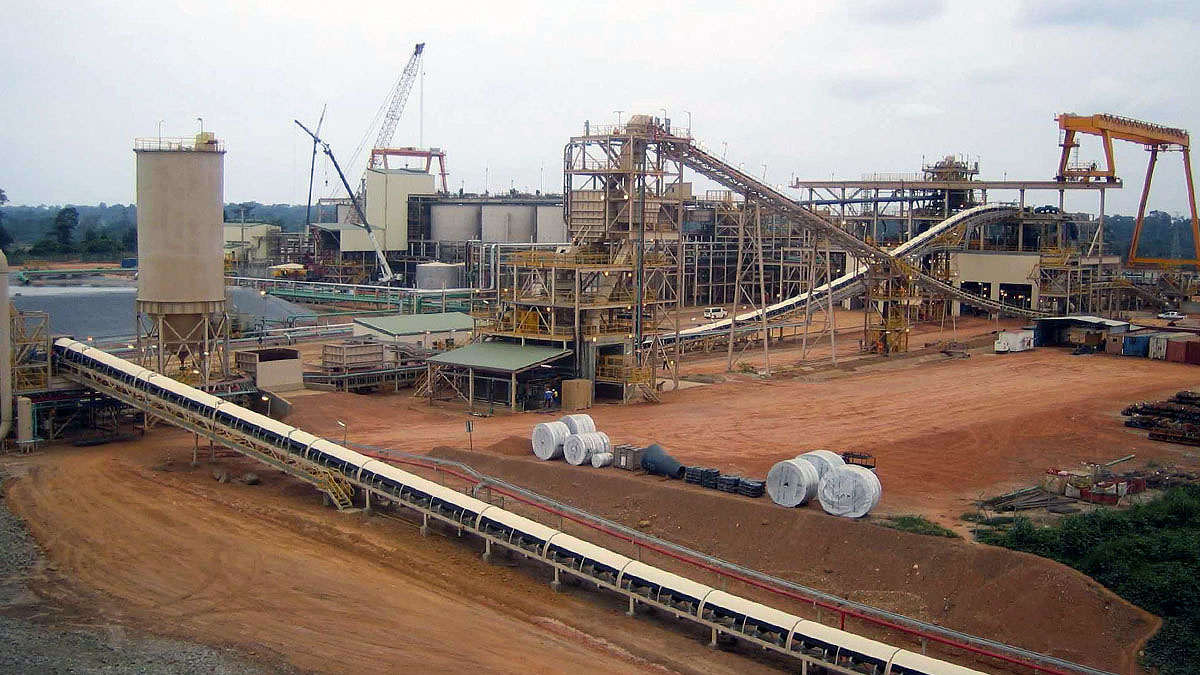
The Institute of Economic Affairs (IEA) has expressed serious reservations regarding Newmont Company’s reported plan to sell its Akyem Gold Mine Project to China’s Zijin Mining Group for $1.0 billion. The IEA deems this deal as fundamentally flawed and detrimental to Ghana’s interests.
Signed on January 19, 2010, the lease agreement between the Ghanaian government and Newmont is valid for 15 years, expiring on January 19, 2025. According to the IEA, any sale must comply with the terms of the lease, which stipulates that the agreement is transferable only with mutual consent between the government and Newmont. The IEA asserts that no such agreement for the mine’s transfer has been reached, nor has Newmont invoked any extension clause.
The IEA pointed out that allowing a foreign company to acquire the mine contradicts President Akufo-Addo’s previous commitment to prioritize Ghanaian investors, as stated in his last State of the Nation Address. The IEA noted that local entities had also bid for the mine but were reportedly outbid by Zijin.
Moreover, the IEA criticized the original lease terms, arguing that they resemble colonial-era agreements that favor foreign companies while depriving Ghana of fair royalties and taxes.
The IEA stated that if Newmont proceeds with the sale, it should be to Ghanaian investors to ensure that the wealth generated from the mine benefits the nation directly.
With the Akyem mine producing an average of 11.4 tonnes of gold annually, the IEA estimated potential yearly earnings of $1 billion for prospective Ghanaian owners. In contrast, the proposed deal with Zijin would allow Newmont to profit significantly while leaving Ghana with minimal financial returns.
The IEA urged the Ghanaian government to protect its national interests by maintaining dominant ownership of its mining sector. It emphasized that Ghana must renegotiate its mineral contracts to maximize benefits from its natural resources, thus fostering economic development and job creation.
To achieve this, the IEA proposed two key reforms: amending the Constitution to ensure natural resources are vested in the state rather than the President, and introducing a provision that limits contract signing within six months of an administration’s term to prevent last-minute agreements favoring individuals or entities close to the government.
The IEA added that Ghana must shift its approach to mineral contracts and governance to fully harness its natural resources for national development, echoing the sentiments of leaders like Rwanda’s President Paul Kagame.